
Services & FAQ
Custom Solutions Built for Your Brand
From high-volume mail to luxury retail packaging, we provide precision-engineered solutions.
Custom Envelopes:
High-volume marketing & branding
Retail Packaging:
E-commerce and shelf-ready goods
Specialty Finishing:
Premium, tactile brand experiences
Manufacturing & Printing
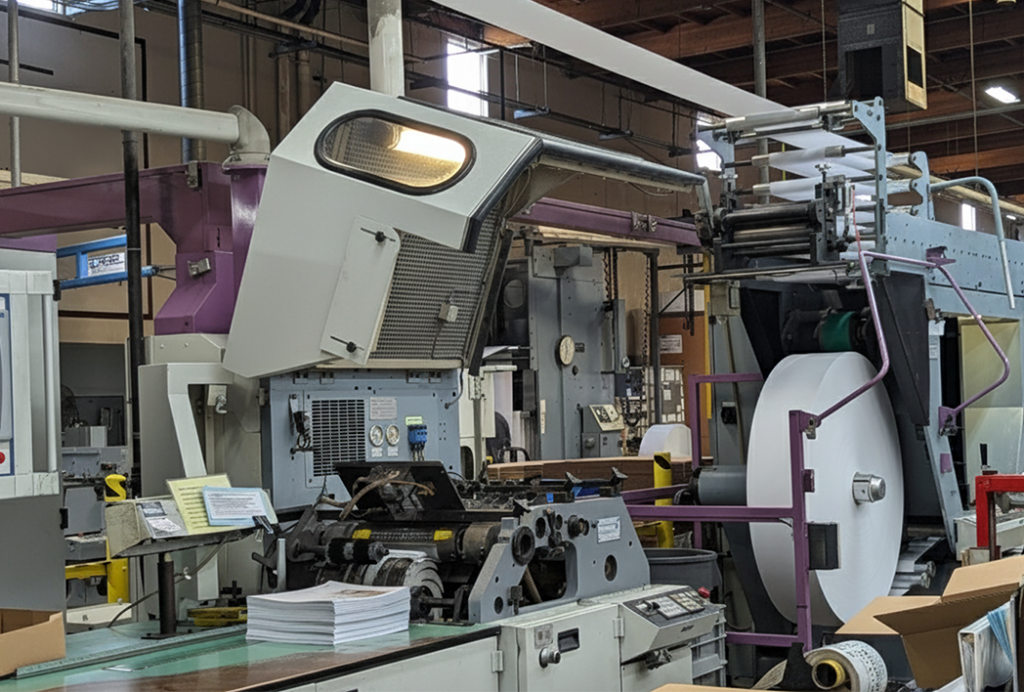
High-speed production and consistent quality at any scale.
Strategic Partnership

Collaborative, precise solutions tailored to your exact needs.
Inventory Management
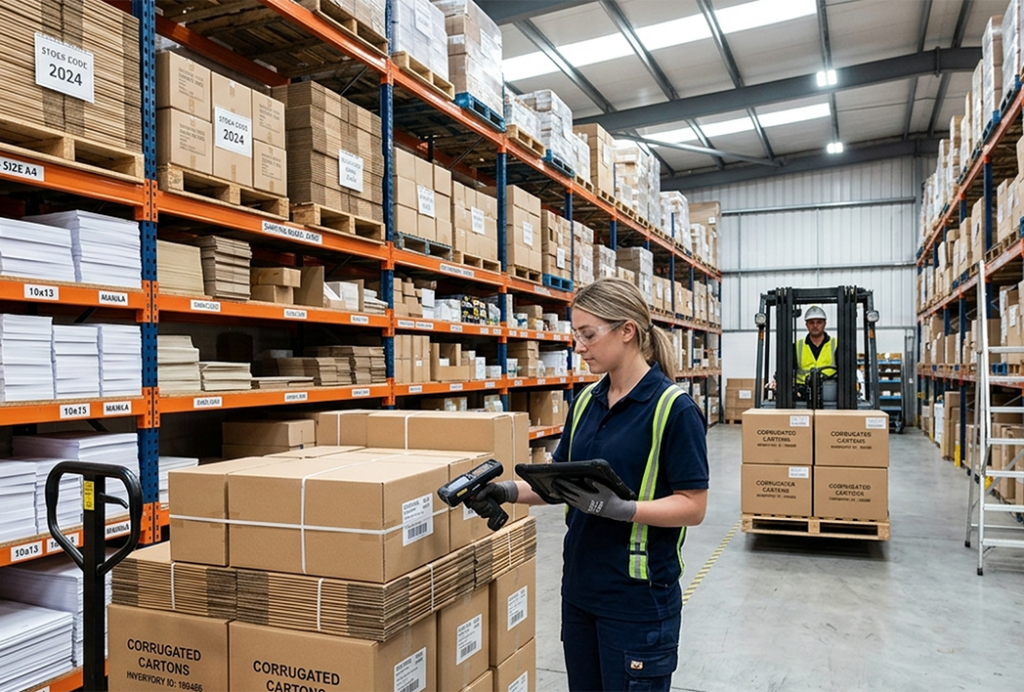
Inventory management and nationwide storage for high-volume needs.
Responsive Support Team

Efficient, end-to-end support ensuring timely and accurate delivery.
FAQs:
Envelopes come in a wide variety of sizes, shapes, and materials. Popular types include:
Standard Business Envelopes: Rectangular envelopes used for business correspondence.
Window Envelopes: Envelopes with a transparent window to display the recipient's address printed on the enclosed document.
Catalog or Booklet Envelopes: Larger envelopes often used for magazines or large documents.
Expansion Envelopes: Also known as a gusset envelope, is a type of envelope with accordion-style sides that expand to hold bulky items or a large volume of documents.
Recyclable Padded Mailer: Lightweight, sustainable and cost-effective shipping solution for e-commerce using a paper-based alternative to plastic and bubble mailers.
Size, Color, and Material: Choose from a wide range of standard and custom sizes, colors, and materials to match your brand's aesthetic.
Custom Printing: Add a personal or professional touch with custom printing. This includes your company logo, return address, and other designs, which is perfect for business branding.
Window Customization: If you need to show specific information from the insert, we can create a custom window to ensure the right details, like a name or address, are always visible. Standard window size is also available.
Seal Customization: You can also customize the seal on an envelope.
Seal Options include:
Regular Gum Flap: A traditional flap that requires moistening to seal.
Zip Stick®: A self-sealing flap that you press to close.
String and Button: Also known as a button and tie closure, this is a reusable fastening system often used for securing heavier or valuable documents. It's an excellent choice for organizing and transporting files, notes, and other important documents.
The primary difference between a catalog envelope and a booklet envelope is the location of the opening flap.
A catalog envelope has its opening on the short side of the envelope. It is also known as an "Open End" envelope.
A booklet envelope has its opening on the long side of the envelope. It is also referred to as an "Open Side" envelope.
Even in the digital age, envelopes remain popular because they offer a tangible, secure, and impactful alternative to digital communication. They are valued for both personal and business use, providing a sense of importance and reliability that digital messages often lack.
They are used for:
Personal Use: To add a special, lasting touch to invitations, cards, and important life events.
Business Use: To provide a secure and official method for delivering sensitive legal, financial, and business documents.
Marketing: To stand out from digital clutter, capture attention, and create a stronger brand impression through direct mail.
A postal indicia, also known as a permit imprint, is a printed marking on a mailpiece that indicates postage has been prepaid. It serves as an alternative to using stamps or a postage meter.
Eligibility: To use an indicia, you must be mailing at least 200 pieces or a total of 50 pounds of mail.
Setup: You need to set up an advanced deposit account with the USPS and apply for a mailing permit using USPS Form 3615. After your permit is approved and you receive a permit number, you can create your indicia.
Payment: Postage costs are calculated based on the number of mailpieces and their weight. The total amount is automatically deducted from your advanced deposit account. For this reason, all mailpieces in a single mailing should have the same weight.
Benefits: Using an indicia saves significant time, as you can simply print the indicia directly onto your mailpieces instead of manually applying stamps.
Yes, print marketing is highly effective for acquiring new customers, often outperforming digital methods in several key areas.
Higher Performance: Direct mail and print ads consistently show higher response and conversion rates than digital ads. The Data & Marketing Association (DMA) found that direct mail gets a 5% response rate from prospects, which is five times higher than the average for email.
More Credible and Memorable: Consumers find print media more trustworthy and less cluttered than digital ads. Print's physical nature creates a stronger emotional connection and better brand recall, with some studies showing people remember print ads for longer.
Stronger for Integrated Campaigns: The most successful marketing strategies combine both print and digital. Campaigns that use both channels can be up to 400% more effective, as print can drive traffic and conversions to digital platforms.
A folded self-mailer (FSM) is a type of mailpiece created from a single sheet or multiple unbound sheets of paper that are folded and sealed to form a mailer.
Unlike a traditional letter, it is not enclosed in an envelope. This allows for multiple panels of content within a compact, self-contained format.
To be eligible for mailing, a folded self-mailer must comply with specific USPS regulations:
Size: The mailpiece must be between 3.5" and 6" tall and 5" to 10.5" wide.
Aspect Ratio: The ratio of the long side to the short side must be between 1.3 and 2.5.
Thickness: The mailpiece cannot be thicker than 0.25".
Weight: It must weigh less than 3 ounces.
Panels: It can have a maximum of 12 panels, depending on the paper stock used.
FSMs must be securely closed with wafer seals to prevent them from getting caught in postal machinery.
Seal Size: Wafer seals must be a minimum of 1" in diameter and non-perforated.
Number of Seals: You must use at least two wafer seals on each mailpiece. If the piece weighs over one ounce, you must use three seals.
Placement: Wafer seal placement is crucial and depends on the fold style and paper stock. Be sure to place seals in a way that doesn't obscure vital information like your phone number or website address. Refer to USPS guidelines for specific placement requirements.
You can purchase USPS-compliant wafer seals from a variety of sources, including major online retailers, office supply stores, and specialized mailing equipment suppliers.
Online Marketplaces: Websites like Amazon.com and Walmart offer a wide selection of brands and types of wafer seals.
Specialty Suppliers: Companies such as WaferSeals.com and Tigerseal Products specialize in mailing products and ensure their tabs meet specific USPS regulations.
Office Supply and Mailing Solution Providers: Stores like Staples and companies like Pitney Bowes also carry postal wafer seals for business and personal mailing needs.
Designing a postal indicia (or permit imprint) requires specific elements to be included on your mailpiece.
Required Elements:
Mail Class: (e.g., First-Class Mail, Standard Mail)
"U.S. Postage Paid"
City and State where your permit is held
"Permit" and your permit number
The indicia must be placed in the upper right-hand corner of your mailpiece, relative to the delivery address.
Tips:
You can print the indicia directly onto your mailpieces or onto a separate label to be applied later.
For questions on design or placement, it is best to consult your local USPS Business Mail Entry Unit or a Mailpiece Design Analyst.
People commonly use the term "cardboard" as a general name for any thick, paper-based material. However, corrugated boxes are specifically made from a multi-layered structure of fluted paper sandwiched between two flat liners. This design provides the strength needed for shipping. In contrast, true cardboard (or paperboard) is a single-layer material used for items like cereal boxes and is not durable enough for shipping.
Yes, corrugated material is an excellent choice for boxes versus plastic, wood or metal. It is lightweight and cost-effective, while its unique structure makes it strong and protective for shipping.
Additionally, corrugated boxes are 100% recyclable, foldable for convenient storage, and provide a sustainable and efficient option.
Yes, absolutely. We offer a full range of custom-printed corrugated box services to help your brand stand out.
Direct Printing: We can print your logo, product information, or other designs directly onto the box.
Full-Color Lithographic Labels: For a high-impact, premium finish, we can apply full-color lithographic labels directly to the box.
Point of Purchase (POP) displays are a highly effective way to influence customer buying decisions directly in a retail environment. They capture attention and drive impulse buys where over 75% of purchase decisions are made in just seconds.
These displays are cost-effective, easy to set up, and can be designed with high-quality graphics to enhance your brand and help your products stand out from the competition.
The Box Manufacturer's Certificate (BMC) is a stamp or seal printed on the bottom flap of a corrugated box. It's a guarantee from the manufacturer that the box meets specific standards for strength and quality.
The certificate provides key information about the box's construction and performance:
Board Construction: Identifies the type of corrugated board used, such as single-wall or double-wall, which indicates its overall durability.
Strength Rating: Displays two common strength tests:
Bursting Strength (Mullen Test): Measures the force required to puncture the box.
Edge Crush Test (ECT): Measures the box's ability to withstand top-to-bottom pressure, indicating its stacking strength.
Size and Weight Limits: Specifies the maximum weight and combined dimensions (length + width + height) the box is designed to hold.
Manufacturer Info: Identifies the company that made the box and their location.
Safety and Protection: The BMC confirms that the box is strong enough to protect your items from damage during shipping and handling, giving you confidence that your products will arrive intact.
Regulatory Compliance: It verifies that the box meets specific industry standards and carrier requirements, particularly for freight and palletized shipments governed by rules like the National Motor Freight Classification (NMFC).
Risk Reduction: Using a box that meets the BMC's specifications is crucial for preventing damage claims from being denied. It serves as proof that you used the correct and most effective packaging for your goods.
A buck slip is a small marketing insert, about the size of a dollar bill, used to promote a specific product, service, or offer. They are an easy way to leverage existing mailings or packages to reach customers.
Buck slips are versatile and can be used in a few ways:
Direct Mail Inserts: Slipped into envelopes that already contain statements or correspondence.
Package Inserts: Included in shopping bags or delivery boxes.
Hand-Delivered: Given directly to customers in person.
Cost-Effectiveness: They're an inexpensive way to market since they don't require additional postage.
Increased Response Rates: A well-designed buck slip can boost customer engagement and response rates.
Brand Promotion: They provide a simple and effective way to promote your brand and offerings.
We deliver nation wide.